

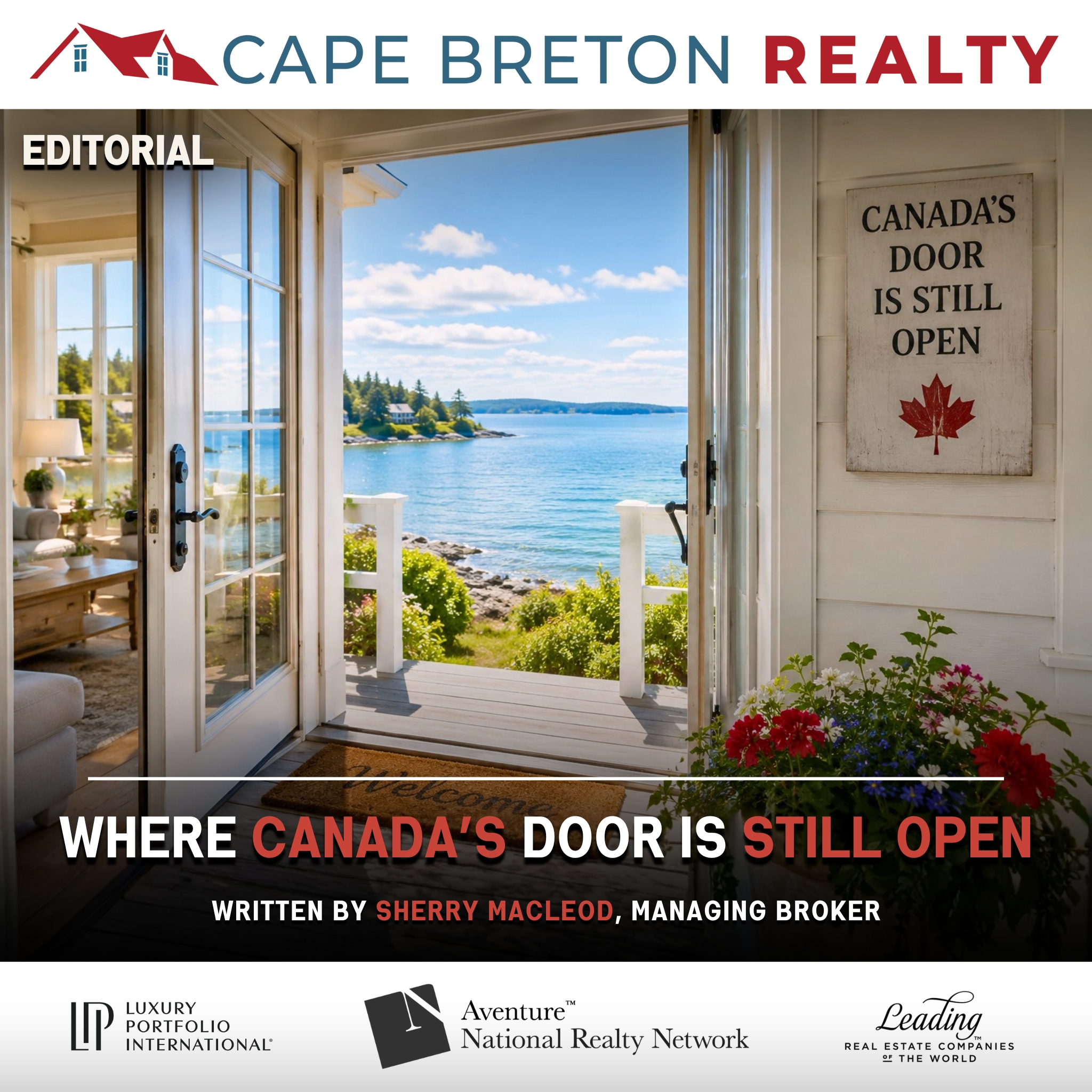
By Sherry MacLeod
Cape Breton Realty
July 27, 2026
Last week, I wrote about how the Canadian dollar has increased buying power for American and European buyers. This week, I’d like to highlight another advantage that isn’t getting enough attention but could matter just as much.
Canada’s federal foreign buyer restrictions have changed the way many international buyers look at our country. What many don’t realize is that not every part of Canada is treated the same.
Rural areas such as Richmond, Inverness, Victoria and Guysborough counties are exempt from the federal foreign buyer restrictions. International buyers can still purchase residential property throughout these counties.
That’s news to many people abroad. They hear there is a foreign buyer ban in Canada, but they don’t realize there are exemptions for many rural areas like ours.
I’ve had conversations with Americans and Europeans who assumed buying property anywhere in Canada was off limits. Once they learn about the exemption here, the conversation changes. Suddenly, Cape Breton and Northeastern Nova Scotia are back on their radar. Pair that with today’s favourable exchange rate and relatively affordable waterfront homes, cottages, farms and acreage, and purchasing becomes far more attainable.
The benefits to our region go well beyond the sale of a property. New homeowners often bring family and friends to visit, and many of those visitors eventually return to purchase homes of their own. They buy vehicles, boats, ATVs, lawn tractors and equipment locally. They renovate existing homes or build new ones, hiring contractors, carpenters, electricians, plumbers, landscapers and paving companies. One home purchase can create a ripple effect that touches dozens of local businesses and tradespeople.
In more than 30 years in real estate, I’ve seen this happen before. When the Canadian dollar dipped to around 65 cents years ago, we welcomed many American and European buyers. Some came for seasonal homes, others for retirement, and many eventually became full-time residents. They invested in their homes, joined community organizations, volunteered, started businesses, paid taxes and became valued members of our communities. At that time, many rural areas were losing schools, post offices and general stores. Adding even a few families made a meaningful difference.
At a time when many rural communities were struggling with declining populations and economic uncertainty, these new residents helped strengthen the local economy and breathed new life into communities that needed it. Their investment didn’t stop at purchasing a property. It supported local dealerships, marinas, hardware stores, garden centres, building suppliers and countless small businesses. They built homes, paved driveways, landscaped properties and hired local tradespeople. The economic ripple effect reached far beyond real estate and helped sustain rural communities.
As the old saying goes, history doesn’t repeat itself, but it often rhymes.
Today, with a favourable exchange rate and our exemption from the current federal foreign buyer restrictions, our region once again has a unique opportunity.
What we do know is this: our doors are open, our communities are welcoming, and our region remains one of Canada’s best-kept secrets.
Sometimes the biggest opportunities aren’t shouted from the rooftops. They’re the ones quietly waiting to be noticed.
For rural Cape Breton and Northeastern Nova Scotia, this may be one of those moments.
Next week: Why tourism may be our region’s greatest economic development tool—and how today’s visitors could become tomorrow’s neighbours.