
Recent reports from CIBC suggest Canada’s housing market may be entering the early stages of a correction. Deputy chief economist Benjamin Tal recently described the situation bluntly: homes in many parts of the country are still too expensive to buy — but not profitable enough to build.
That paradox is showing up clearly in large urban markets such as Toronto and Vancouver. Condo construction is slowing, buyers are hesitating, and developers are becoming cautious about starting new projects. Even though the Canada Mortgage and Housing Corporation reported an increase in housing starts last year, economists warn those numbers may reflect projects approved long ago rather than what is happening today.
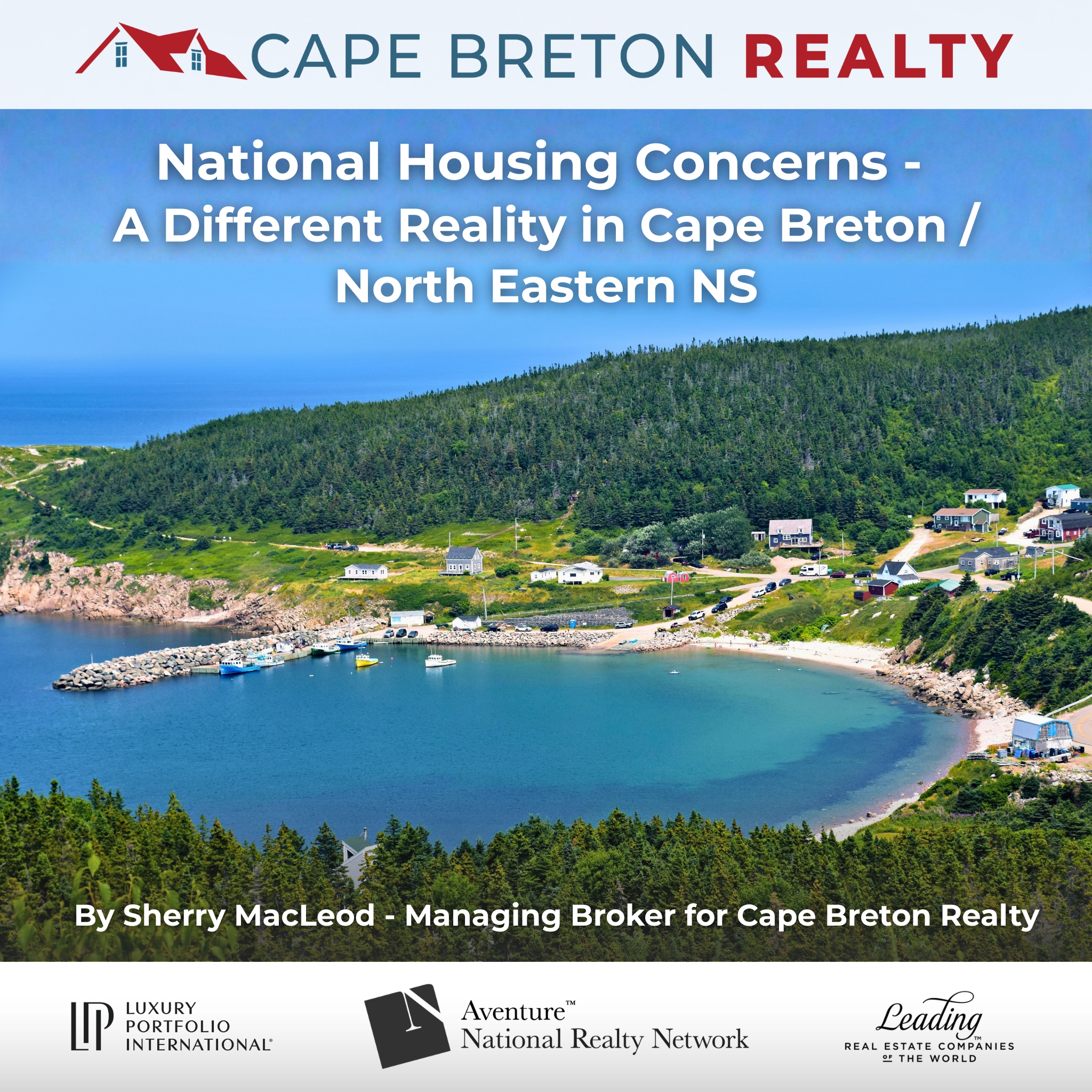
But here in Cape Breton and Northeast Nova Scotia, the situation looks quite different.
For decades our market has operated on a far more practical footing. Prices never climbed to the levels seen in Canada’s largest cities. Speculative condo building was never a major factor here. And new homes were rarely built simply for resale because the numbers often didn’t work.
In fact, all seasoned Realtors will tell you that by the time you factor in labour, materials, permits, and development costs, it has long been difficult to build a new home and sell it at a price the local market can support. That reality may not sound glamorous, but it has quietly protected our market from the boom-and-bust cycles seen elsewhere.
While major cities now worry about oversupply, our region still faces the opposite challenge: a shortage of good, well-maintained homes for sale.
Despite national headlines predicting housing weakness, the resale market in Cape Breton and Northeast Nova Scotia continues to move at a steady pace. Homes priced appropriately are selling. Waterfront properties, rural homes, and lifestyle properties continue to attract interest. Buyers are still coming from Ontario, Alberta, the United States, and increasingly from Europe.
And that is not surprising.
When someone living in a large urban centre compares the cost of housing, the contrast can be dramatic. A modest home in Toronto or Vancouver can easily exceed one million dollars. In our region, buyers can often purchase a home with land, water views, or even waterfront for a fraction of that.
But affordability is only part of the story.
We are living through a period of global uncertainty. Conflict in the Middle East, geopolitical tensions involving Russia and Europe, shifting trade relationships, and manufacturing jobs leaving parts of central Canada all contribute to a sense that the world is becoming less predictable.
In that environment, people reassess what matters.
- Community matters.
- Stability matters.
- Quality of life matters.
Cape Breton and Northeast Nova Scotia offer all three.
We have natural beauty, space, and a pace of life that many people are actively seeking. Remote work has also changed the equation. For many professionals, living close to nature while maintaining a career connected to larger markets is no longer just a dream — it’s a realistic option.
None of this means our market is immune to economic forces. Higher interest rates and construction costs affect everyone. And if Canada wants to improve housing affordability nationally, governments will need to address the rising cost of building homes.
But the lesson from our region is an important one: stability matters.
Cape Breton’s real estate market was never driven by speculation or rapid price inflation. It has been built on real demand, real communities, and realistic values.
And in uncertain times, those fundamentals may turn out to be one of our greatest strengths.